
Works of Mercy

And the King will answer them,
‘Truly, I say to you, as you did it to one of the least of these my brothers, you did it to me.’
Matthew 25:40
“When the Son of Man comes in his glory, and all the angels with him, then he will sit on his glorious throne. Before him will be gathered all the nations, and he will separate people one from another as a shepherd separates the sheep from the goats. And he will place the sheep on his right, but the goats on the left. Then the King will say to those on his right, ‘Come, you who are blessed by my Father, inherit the kingdom prepared for you from the foundation of the world. For I was hungry and you gave me food, I was thirsty and you gave me drink, I was a stranger and you welcomed me, I was naked and you clothed me, I was sick and you visited me, I was in prison and you came to me.’ Then the righteous will answer him, saying, ‘Lord, when did we see you hungry and feed you, or thirsty and give you drink? And when did we see you a stranger and welcome you, or naked and clothe you? And when did we see you sick or in prison and visit you?’ And the King will answer them, Truly, I say to you, as you did it to one of the least of these my brothers, you did it to me.’
Then he will say to those on his left, Depart from me, you cursed, into the eternal fire prepared for the devil and his angels. For I was hungry and you gave me no food, I was thirsty and you gave me no drink, I was a stranger and you did not welcome me, naked and you did not clothe me, sick and in prison and you did not visit me.’ Then they also will answer, saying, ‘Lord, when did we see you hungry or thirsty or a stranger or naked or sick or in prison, and did not minister to you?’ Then he will answer them, saying, ‘Truly, I say to you, as you did not do it to one of the least of these, you did not do it to me.’"
Matthew 25:31-45
Catechism Part Three VI. Love For the Poor
"2447 The works of mercy are charitable actions by which we come to the aid of our neighbour in his spiritual and bodily necessities. Instructing, advising, consoling, comforting are spiritual works of mercy, as are forgiving and bearing wrongs patiently. the corporal works of mercy consist especially in feeding the hungry, sheltering the homeless, clothing the naked, visiting the sick and imprisoned, and burying the dead. Among all these, giving alms to the poor is one of the chief witnesses to fraternal charity: it is also a work of justice pleasing to God:
He who has two coats, let him share with him who has none and he who has food must do likewise. But give for alms those things which are within; and behold, everything is clean for you. If a brother or sister is ill-clad and in lack of daily food, and one of you says to them, "Go in peace, be warmed and filled," without giving them the things needed for the body, what does it profit?
2448 "In its various forms - material deprivation, unjust oppression, physical and psychological illness and death - human misery is the obvious sign of the inherited condition of frailty and need for salvation in which man finds himself as a consequence of original sin. This misery elicited the compassion of Christ the Savior, who willingly took it upon himself and identified himself with the least of his brethren. Hence, those who are oppressed by poverty are the object of a preferential love on the part of the Church which, since her origin and in spite of the failings of many of her members, has not ceased to work for their relief, defense, and liberation through numerous works of charity which remain indispensable always and everywhere."
2449 Beginning with the Old Testament, all kinds of juridical measures (the jubilee year of forgiveness of debts, prohibition of loans at interest and the keeping of collateral, the obligation to tithe, the daily payment of the day-laborer, the right to glean vines and fields) answer the exhortation of Deuteronomy: "For the poor will never cease out of the land; therefore I command you, 'You shall open wide your hand to your brother, to the needy and to the poor in the land.'" Jesus makes these words his own: "The poor you always have with you, but you do not always have me." In so doing he does not soften the vehemence of former oracles against "buying the poor for silver and the needy for a pair of sandals . . .," but invites us to recognize his own presence in the poor who are his brethren.
Corporal Works of Mercy:Physical needs
|
| Spiritual Works of Mercy:Emotional/spiritual needs
|
POPE FRANCIS on the Corporal and Spiritual Works of Mercy

"We reflected on the Father’s action in the Old Testament and then, in the Gospel account, we saw how Jesus, in his words and actions, is the Incarnation of Mercy.
He, in return, taught his disciples: “Be merciful, even as your Father is merciful” (Lk 6:36). It is a responsibility that challenges the conscience and actions of every Christian. In fact, it is not enough to experience God’s mercy in one’s life; whoever receives it must also become a sign and instrument for others. Mercy, therefore, is not only reserved for particular moments, but it embraces our entire daily existence.
How can we, therefore, be witnesses of mercy? We do not think that it is done with great efforts or superhuman actions. No, it is not so. The Lord shows us a very simple path, made by small actions which, nonetheless, have great value in his eyes, to the extent to which he has told us that it is by these actions we will be judged. In fact, one of the most beautiful pages from Matthew’s Gospel brings us the lesson which we can, in every way, hold to be true as the “testament of Jesus” by the Evangelist, who had experienced the action of Mercy directly on himself. Jesus says that every time we give food to the hungry and drink to the thirsty, cloth the naked and welcome the foreigner, visit the sick or imprisoned, we do the same to him (cf. Mt 25:31-46). The Church calls these actions “corporal works of mercy”, because they assist people with their material necessities.
There are also, however, seven other works of mercy called “spiritual”, which pertain to other equally important needs, especially today, because they touch the person’s soul, and often create the greatest suffering. We certainly remember a phrase which has entered into the common language: “Bear wrongs patiently”. And there are; there are troublesome people! It might seem like a minor thing which makes us smile, but instead contains a feeling of profound charity; it is the same for the other six [spiritual works of mercy], which are good to remember: counsel the doubtful, instruct the ignorant, admonish sinners, console the afflicted, pardon offences, pray to God for the living and the dead. These are daily things! “But I am afflicted...” — “But God will help you, I don’t have time...”. No! I stop myself, I listen, I give my time and console him; that is an act of mercy, and it is done not only to him, it is done to Jesus!
In the following Catechesis, we will reflect on these works which the Church presents to us as the concrete way of living out mercy. Over the course of centuries, many simple people have put this into practice, giving their sincere witness of faith. The Church, after all, faithful to her Lord, nourishes a preferential love for the weakest. Often it is the people closest to us who need our help. We should not go out in search of some unknown business to accomplish. It is better to begin with the simplest, which the Lord tells us is the most urgent. In a world which, unfortunately, has been damaged by the virus of indifference, the works of mercy are the best antidote. In fact, they educate us to be attentive to the most basic needs of “the least of these my brethren” (Mt 25:40), in whom Jesus is present. Jesus is always present there. Where there is need, there is someone who has need, be it material or spiritual. Jesus is there. Recognizing his face in those who are in need is one way to really confront indifference. He allows us to be always vigilant, and avoid having Christ pass by without us recognizing him. It recalls to mind the words of St Augustine: “Timeo Iesum ranseuntem” (Serm., 88, 14, 13): “I fear the Lord passing by”, and I do not notice him; I fear that the Lord may pass before me in one of these little people in need, and I do not realize that it is Jesus. I fear that the Lord may pass by without my recognizing him! I wondered why St Augustine said he feared the passing by of Jesus. The answer, unfortunately, is in our behaviour: because we are often distracted, indifferent, and when the Lord closely passes us by, we lose the opportunity to encounter him. The works of mercy reawaken in us the need, and the ability, to make the faith alive and active with charity.
I am convinced that, through these simple, daily actions, we can achieve a true cultural revolution, like there was in the past. If every one of us, every day, does one of these, this will be a revolution in the world! Everyone, each and every one of us. How many Saints are remembered even today, not for the great works which they accomplished, but for the charity which they knew how to impart! We think of the recently canonized Mother Teresa: we do not remember her because of the many houses she opened in the world, but because she stooped down to every person she found in the middle of the street in order to restore their dignity. How many abandoned children did she embrace in her arms; how many moribund people has she accompanied to eternity, holding their hands! These works of mercy are the features of the face of Jesus Christ, who takes care of his littlest brethren in order to bring the tenderness and closeness of God to each of them. May the Holy Spirit help us; may the Holy Spirit kindle within us the desire to live this way of life: at least once a day, at least! Let us again learn the corporal and spiritual works of mercy by heart, and ask the Lord to help us put them into practice every day, and in those moments where we see Jesus in a person who is in need."
GENERAL AUDIENCE
St Peter's Square Wednesday, 12 October 2016
POPE LEO XIV ANGELUS on the Works of Mercy
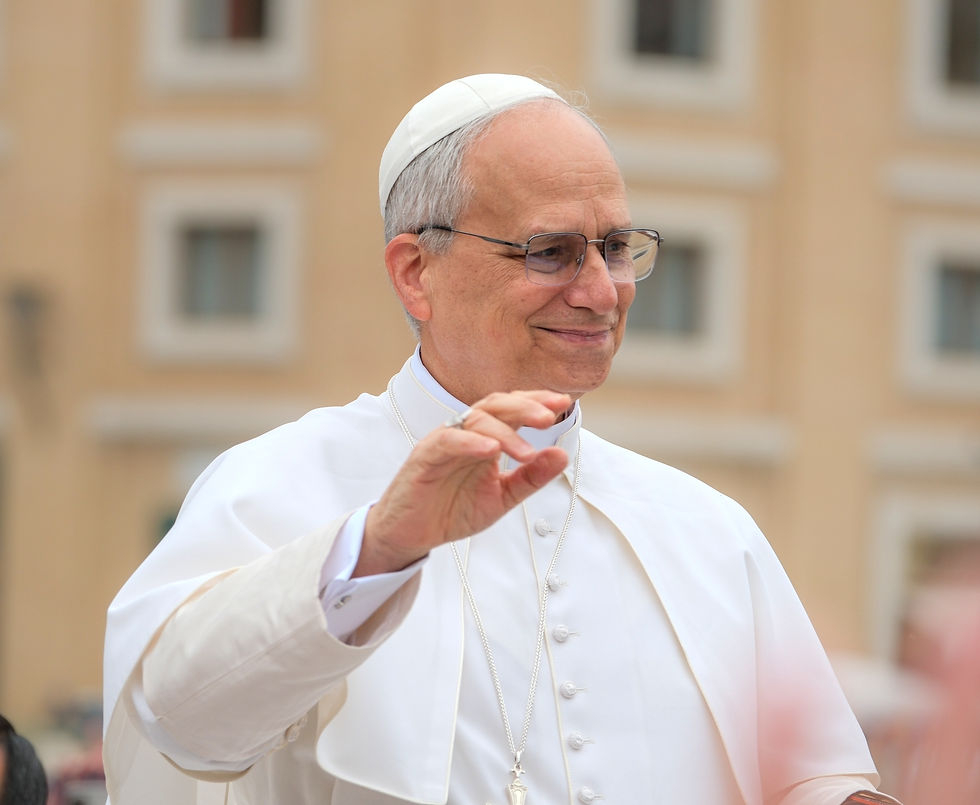
In today’s Gospel Jesus invites us to consider how we will invest the treasure that is our life (cf. Lk 12:32-48). He says: “Sell your possessions and give alms” (v. 33).
He exhorts us not to keep to ourselves the gifts that God has given us, but rather to use them generously for the good of others, especially those most in need of our help. It is not simply a matter of sharing the material goods we have, but putting our skills, time, love, presence and compassion at the service of others. In short, everything in God’s plan that makes each of us a priceless and unrepeatable good, a living and breathing asset, must be cultivated and invested in order to grow. Otherwise, these gifts dry up and diminish in value, or they end up being taken away by those, who like thieves, snatch them up as something simply to be consumed.
The gift of God that we are is not made to be used in such a manner. We need space, freedom and relationships in order to come to fulfillment and express ourselves. We need love, which alone transforms and ennobles every aspect of our existence, making us more and more like God. It is not by chance that Jesus pronounces these words while he is on the road to Jerusalem, where he will offer himself on the cross for our salvation.

The works of mercy are the most secure and profitable bank where we can entrust the treasure of our existence, because there, as the Gospel teaches us, with “two small copper coins” even the poor widow becomes the richest person in the world (cf. Mk 12:41-44).
In this regard, Saint Augustine says: “If you gave a pound of coppers and received a pound of silver, or a pound of silver and received one of gold, you would be delighted at your luck. What you give will certainly be transformed; it isn’t gold, it isn’t silver, but eternal life that will come your way” (Sermon 390, 2, PL 39, 1706). And he explains why: “It will be transformed, because you yourself will
be transformed” (ibid).
To understand what he means by this, we can think of a mother who embraces her children: is she not the most beautiful and richest person in the world? Or a boyfriend and girlfriend, when they are together: do they not feel like king and queen? We could think of many other examples.
Therefore, wherever we are, in the family, parish, school or workplace, we should try not to miss any opportunity to act with love. This is the type of vigilance that Jesus asks of us: to grow in the habit of being attentive, ready and sensitive to one another, just as he is with us in every moment.

Sisters and brothers, let us entrust to Mary this desire and responsibility: may she, the Morning Star, help us to be the “watchmen” of mercy and peace in a world marked by many divisions. Saint John Paul II taught us this (cf. Vigil of Prayer for the 15th World Youth Day, 19 August 2000). And in a beautiful way, so did the young people who came to Rome for the Jubilee.
Saint Peter's Square Sunday, 10 August 2025
Misericordiae Vultus
BULL OF INDICTION OF THE EXTRAORDINARYJUBILEE OF MERCY; POPE FRANCIS
11 April, Sunday of Divine Mercy, 2015
It is my burning desire that, during this Jubilee, the Christian people may reflect on the corporal and spiritual works of mercy. It will be a way to reawaken our conscience, too often grown dull in the face of poverty. And let us enter more deeply into the heart of the Gospel where the poor have a special experience of God’s mercy. Jesus introduces us to these works of mercy in his preaching so that we can know whether or not we are living as his disciples. Let us rediscover these corporal works of mercy: to feed the hungry, give drink to the thirsty, clothe the naked, welcome the stranger, heal the sick, visit the imprisoned, and bury the dead. And let us not forget the spiritual works of mercy: to counsel the doubtful, instruct the ignorant, admonish sinners, comfort the afflicted, forgive offences, bear patiently those who do us ill, and pray for the living and the dead.
We cannot escape the Lord’s words to us, and they will serve as the criteria upon which we will be judged: whether we have fed the hungry and given drink to the thirsty, welcomed the stranger and clothed the naked, or spent time with the sick and those in prison (cf. Mt 25:31-45). Moreover, we will be asked if we have helped others to escape the doubt that causes them to fall into despair and which is often a source of loneliness; if we have helped to overcome the ignorance in which millions of people live, especially children deprived of the necessary means to free them from the bonds of poverty; if we have been close to the lonely and afflicted; if we have forgiven those who have offended us and have rejected all forms of anger and hate that lead to violence; if we have had the kind of patience God shows, who is so patient with us; and if we have commended our brothers and sisters to the Lord in prayer. In each of these “little ones,” Christ himself is present. His flesh becomes visible in the flesh of the tortured, the crushed, the scourged, the malnourished, and the exiled… to be acknowledged, touched, and cared for by us. Let us not forget the words of Saint John of the Cross: “as we prepare to leave this life, we will be judged on the basis of love”.
We should seek out opportunities to put these Works of Mercy into practice.

In addition to aiding those in need, they deepen our relationship
with Jesus.


Comments